JPC Podcast 12, Episode 1: Robert Deckey on Distress Cycles, REIT IPOs, and the Evolution of Real Estate Recovery
Jacobs P.C.
Robert Deckey on Distress Cycles and the Evolution of Real Estate Recovery
Every real estate cycle creates its own version of distress.
But not all distress looks the same.
In Episode 1 of JPC Podcast 12, Leo Jacobs sits down with Robert Deckey, a veteran of more than three decades in distressed real estate investing, to explore how the industry has evolved from the early 1990s to today.
Deckey’s career began during one of the most chaotic periods in modern financial history - the Savings & Loan crisis - a moment that shaped the way distressed real estate markets function even today.
Learning Distress During the S&L Crisis
For many professionals entering the market during stable times, distress investing is theoretical.
For Deckey, it was the foundation of his career.
Graduating during the S&L crisis, he witnessed firsthand how quickly real estate values could collapse - and how financial systems respond when banks fail and lenders disappear.
During those early years working at JP Morgan and Citibank, Deckey helped structure REIT IPOs designed to rescue heavily leveraged developers.
These public offerings allowed private companies drowning in debt to restructure their balance sheets and continue operating.
Instead of bankruptcy, developers were able to transform their businesses into publicly traded REITs - gaining access to equity markets and reducing debt pressure.
It was an early example of how capital markets can solve what initially appears to be impossible.
Reinventing Developers Through Public Markets
One of the most fascinating transformations Deckey witnessed involved private real estate operators becoming public-company CEOs.
Developers who once ran regional private firms suddenly had to:
• Manage public shareholders
• Scale nationally through acquisitions
• Operate with institutional governance
• Build billion-dollar platforms
Companies such as Prologis and other major REITs emerged during this transformation.
The shift was not simply financial - it required an entirely new way of thinking about business strategy, transparency, and growth.
What began as a response to distress ultimately created some of the most successful real estate companies in the world.
The “Golden Days” of Distress Investing
The early 1990s also created what many investors still refer to as the golden era of distress investing.
Government agencies like the Resolution Trust Corporation (RTC) rapidly sold distressed loan portfolios from failed banks.
At the time, the government lacked the experience to manage these assets effectively.
As a result, loans were often sold quickly - and cheaply - to the highest bidders.
Major institutional investors such as Blackstone and Morgan Stanley built enormous portfolios by purchasing these distressed assets at deep discounts.
The returns were extraordinary.
In many cases, investors generated 30–50% internal rates of return simply by acquiring distressed loan pools and restructuring the underlying assets.
How Distress Investing Has Changed
The environment today looks very different.
Over the past three decades, both governments and financial institutions have become significantly more sophisticated in how they manage distressed loans.
Instead of immediately selling loans at deep discounts, lenders now often prefer strategies such as:
• Loan restructurings
• Blend-and-extend agreements
• Asset repositioning
• Longer-term recovery strategies
This means fewer distressed assets are sold at the bottom of the market.
While distress still exists, the easy opportunities that characterized the 1990s have largely disappeared.
Investors today must be far more disciplined, patient, and strategic.
The Modern Distress Investor
For Robert Deckey, the key lesson from decades of experience is simple:
Distress investing isn’t just about buying cheap assets.
It’s about understanding cycles.
Every downturn presents a different set of structural problems - interest rates, capital availability, regulation, or investor psychology.
The successful investor adapts to those conditions rather than expecting the same playbook to work forever.
And that ability to evolve is what defines the professionals who truly confront the impossible..
Final Thought
Real estate cycles repeat - but they rarely repeat the same way.
The opportunities that existed in the 1990s were shaped by inexperienced lenders and government agencies learning how to manage failing banks.
Today’s market is more sophisticated.
More competitive.
And more complex.
But the principle remains unchanged:
The investors who understand cycles - and adapt their strategies accordingly - are the ones who survive and succeed.
🎧 Watch Episode 1
Watch Episode 1 with Robert Deckey for a powerful conversation about distress cycles, capital markets, and how real estate investors navigate impossible markets.
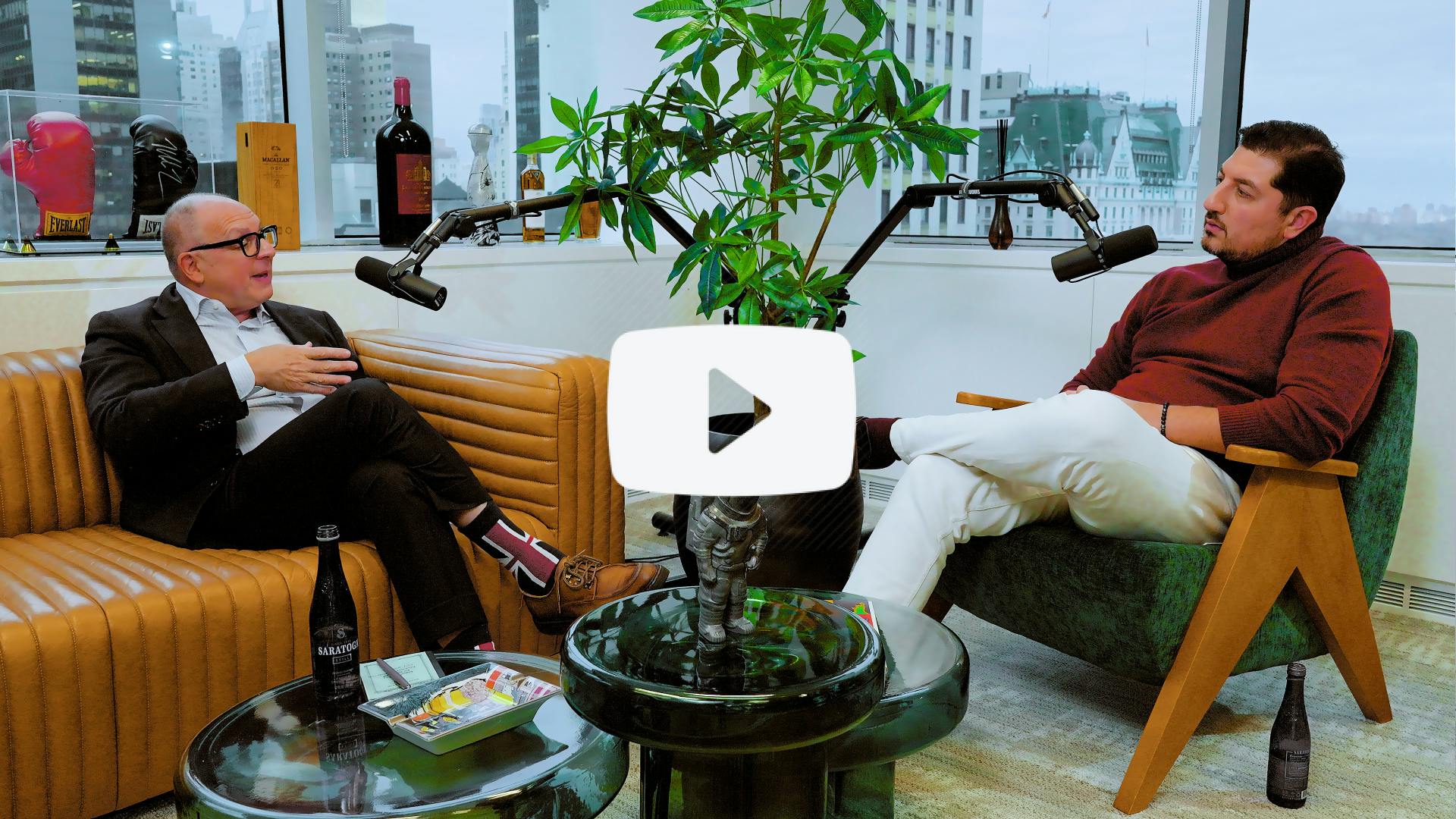
PODCAST - Confronting the Impossible with Leo Jacobs.
Leo Jacobs, Founder and CEO of Jacobs PC
Known for finding creative, expedient solutions to complex and high-profile cases, Leo excels in matters including distressed investment and asset management, real estate law, corporate law, dispute resolution, business divorces, negotiation, and more. Leo’s extensive expertise in debt and equity structures enables him to employ a full spectrum of legal tools to achieve swift, optimal results for clients. His practice, Jacobs P.C., bridges commercial litigation, corporate transactions, and financial rehabilitation, handling cases across federal, state, and bankruptcy courts, as well as administrative tribunals.
If you would like to join the podcast email requests to pr@jacobspc.com